This one ingredient will unlock kale's superpowers
A new study shows that how you consume this leafy green is the key to helping your body absorb its nutrients.
You may have heard that kale is loaded with nutrients like calcium, iron, magnesium, potassium, fiber, and vitamins A, C, and K. It’s also a rich source of carotenoids—plant-based compounds that act as antioxidants in the body—which are essential for eye and skin health and immune function, notes Wendy Bazilian, a nutrition and wellness expert in San Diego.
But reaping the benefits of kale is not as simple as just eating it plain. Preparation plays a large part in how the leafy green is digested and how its nutrients are absorbed.
A study published in the December 2025 issue of Food Nutrition found that the nutrients in kale are better absorbed in the body when the kale is dressed with a simple mixture of olive oil and water—and this is true whether the kale is raw or cooked.
The study sought to investigate the impact of various culinary strategies—including using olive oil-based dressings on raw or cooked kale—on the absorption of nutrients in the leafy green as it passed through a simulated model of the mouth, stomach, and small intestine.
“Kale contains many fat-soluble nutrients [that] provide significant health benefits,” explains study coauthor Ruojie Vanessa Zhang, an assistant professor of food, nutrition, and exercise sciences at the University of Missouri. “But they do not dissolve well in the watery environment of the gastrointestinal tract when kale is eaten alone. As a result, their absorption is limited.”
By contrast, when kale is consumed with a dressing or emulsion that includes olive oil, the oil is digested in the gut, forming tiny particles called “mixed micelles” that carry carotenoids and other fat-soluble nutrients through the gastrointestinal tract and across the intestinal lining, she says. “This process greatly enhances their absorption and overall bioavailability.”
How to prep kale
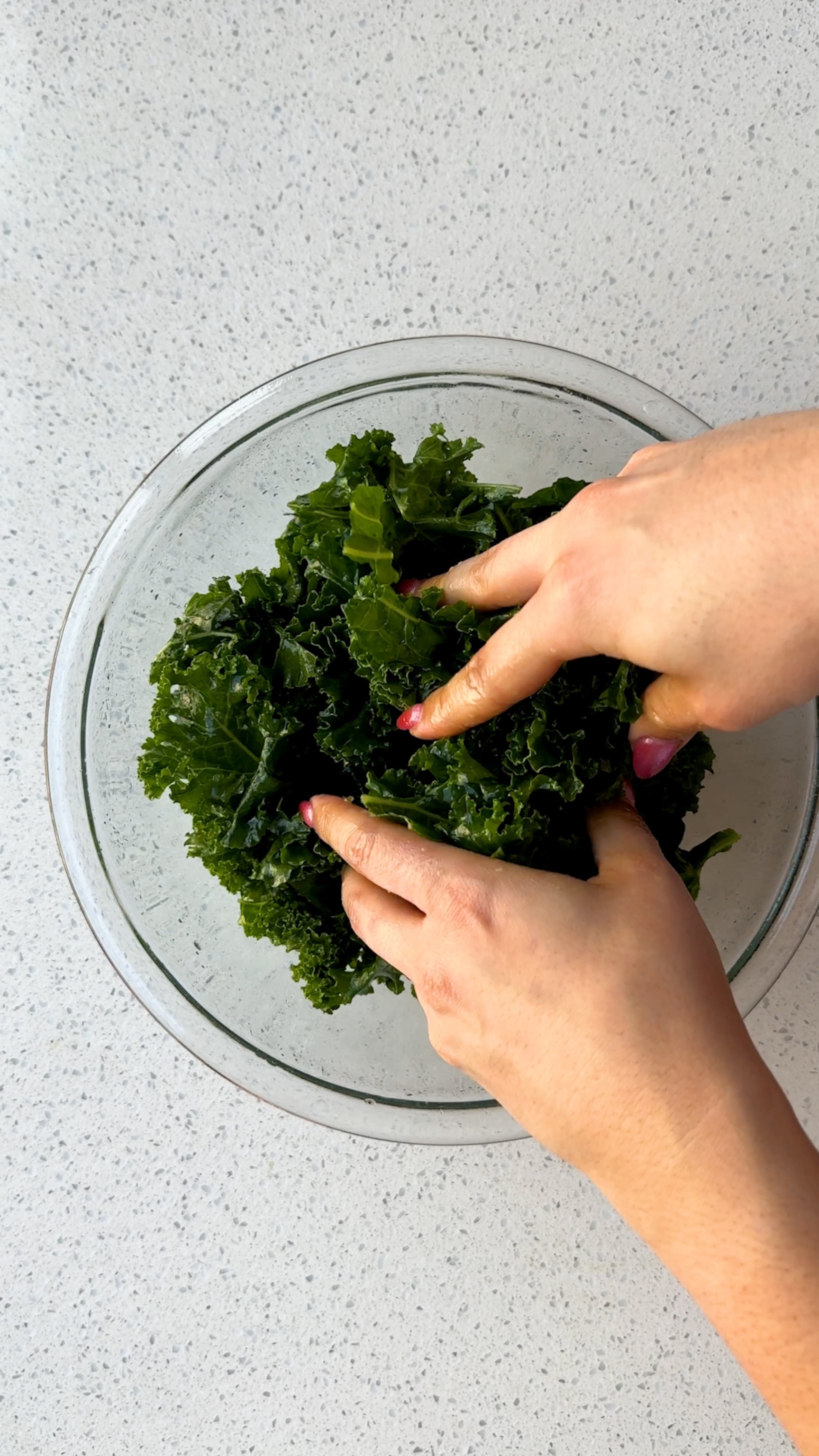
Massaging kale with olive oil is likely to have a similar effect because it “would help break down some of the cell walls, leading to increased carotenoid release,” adds study coauthor David Julian McClements, a professor in the department of food science at the University of Massachusetts. (Bazilian describes this effect as akin to a “jail break” for the nutrients.) The presence of the small fat droplets from the oil would then enhance absorption of those nutrients.
Whether you choose to consume kale raw or cooked, “it’s the presence of the fat in the emulsion that does the trick, making the carotenoids more bioavailable,” says Keith Ayoob, a registered dietitian-nutritionist in New York City and an associate professor emeritus of pediatrics at the Albert Einstein College of Medicine. “Kale really needs fat to be present, but it doesn’t take a lot of fat and it doesn’t have to be olive oil. It could be another healthy oil like canola oil.”
Pairing kale with foods like avocado or nuts would also improve the absorption of fat-soluble nutrients, Zhang adds.
In the study, the researchers cooked the kale by boiling it, but the effects are likely similar for other cooking methods such as steaming, braising, or roasting with an oil-containing emulsion, McClements says. With any cooking method, the presence of small fat droplets can solubilize and transport the nutrients in kale through the gastrointestinal tract.
The best ways to eat kale
“As a nutritionist, my feeling is [to] eat the kale in the way you like it," says Ayoob. "It's such a dynamite vegetable."
Ayoob has a great hack for removing kale from the tough stem: Simply hold the stem or stalk, fold the leafy parts across the stem, then pull them off.
“I think of kale as the queen of greens,” says Bazilian. “It’s a hearty green that’s got a lot of nutrition in it including phytochemicals and a high water content, and it’s super low in calories.”
You can prepare kale in many different ways, such as chopping it finely and blending it into a pesto or adding it to a smoothie. You can also throw kale leaves into a salad, stir-fry, soup, or stew.
“It’s a superfood not just because of the nutrients it contains,” Bazilian says, “but because it has staying power and adapts to different cooking techniques.”
