How chess became medieval Europe’s favorite pastime
Chess spread quickly through feudal Europe, far from its roots in sixth-century India. Here’s how the game of strategy kept the elite entertained.

During recent excavations of a forgotten castle in southern Germany, archaeologists stumbled upon a small medieval treasure trove lying under the debris of a collapsed wall: a chess knight, a six-sided die, and four flower-shaped pieces. Untouched and protected from the elements, the game pieces were found nearly intact, having been buried for a millennium. The knight, carved with a pair of eyes and a mane, was dated to the 11th or 12th century: a time when the game of chess was fairly new to Europe yet catapulted to fiery popularity among the medieval elite.
Nobles needed to fill long, monotonous hours spent locked away in their castles, and chess provided an ideal intellectual outlet, one that mirrored the hierarchies of feudal society and rewarded careful strategy over brute force. From these isolated fortresses, the game soon spread farther afield, appearing in towns along with an emerging stronger middle class. Like the famous Lewis Chessmen discovered in Scotland nearly two centuries ago, this newly found knight stood witness to a high point of chess’s popularity that has yet to be matched.
Early moves
While chess may be the Western world’s most enduring game, its roots lie far from the lonely castles of the Middle Ages. It first appeared in India in the sixth century as a four-person game named chaturanga which means “four limbs,” a reference to the divisions of the army. Made up of the infantry, cavalry, elephantry, and chariotry, the game involved an element of chance, but pieces moved in the same ways as today’s pawn, knight, bishop, and rook.
Spreading along the Silk Road into Persia, the game became known as shatranj in Arabic, capturing the Islamic world after the conquest of Persia. By the ninth and 10th centuries, chess masters such as Al Adli and Al Suli had developed a sophisticated theory of play, recording openings, strategies, and famous matches in detailed treatises.

It was through contact with the Muslim world, particularly in Spain, Sicily, and the Crusader states, that chess reached Europe in the 10th and 11th centuries. Córdoba, the great cultural capital of Al Andalus, was likely a key entry point. One early record of a European set dates back to 1008, when Ermengol I, count of Urgel in Catalonia, bequeathed crystal chess pieces in his will to the monastery of Saint-Gilles, in Provence, demonstrating how valuable these pieces were and the high esteem in which they were held. By the early 11th century, the game, born in India and refined in Persia, had firmly taken root in Spain. From there, it would spread with alacrity across the courts and cloisters of medieval Europe.
(How medieval fortresses were built for war)
At the top of its game
Chess arrived in Europe at just the right time. Freed from constant military duties, the nobility faced long evenings and idle winters, and chess satisfied the need for a pastime that would stretch the mind. Feudalism had emerged after the collapse of the Western Roman Empire, and the continent fragmented into small kingdoms and tribal territories, relying on a network of lords who could regularly defend territory at the local level. But by the 11th and 12th centuries, as monarchies grew stronger and territories more stable, feudal obligations became codified and military obligations were often delegated. With this came the slow transformation of noble life. Cut off from outside society, with serfs supplying him with food and labor, the noble found himself devoid of responsibilities, apart from the occasional hunting expedition or, for some, crusade. Chess was an ideal distraction, and it had no serious rivals that could offer such satisfying mental exercise.
Quickening the pace
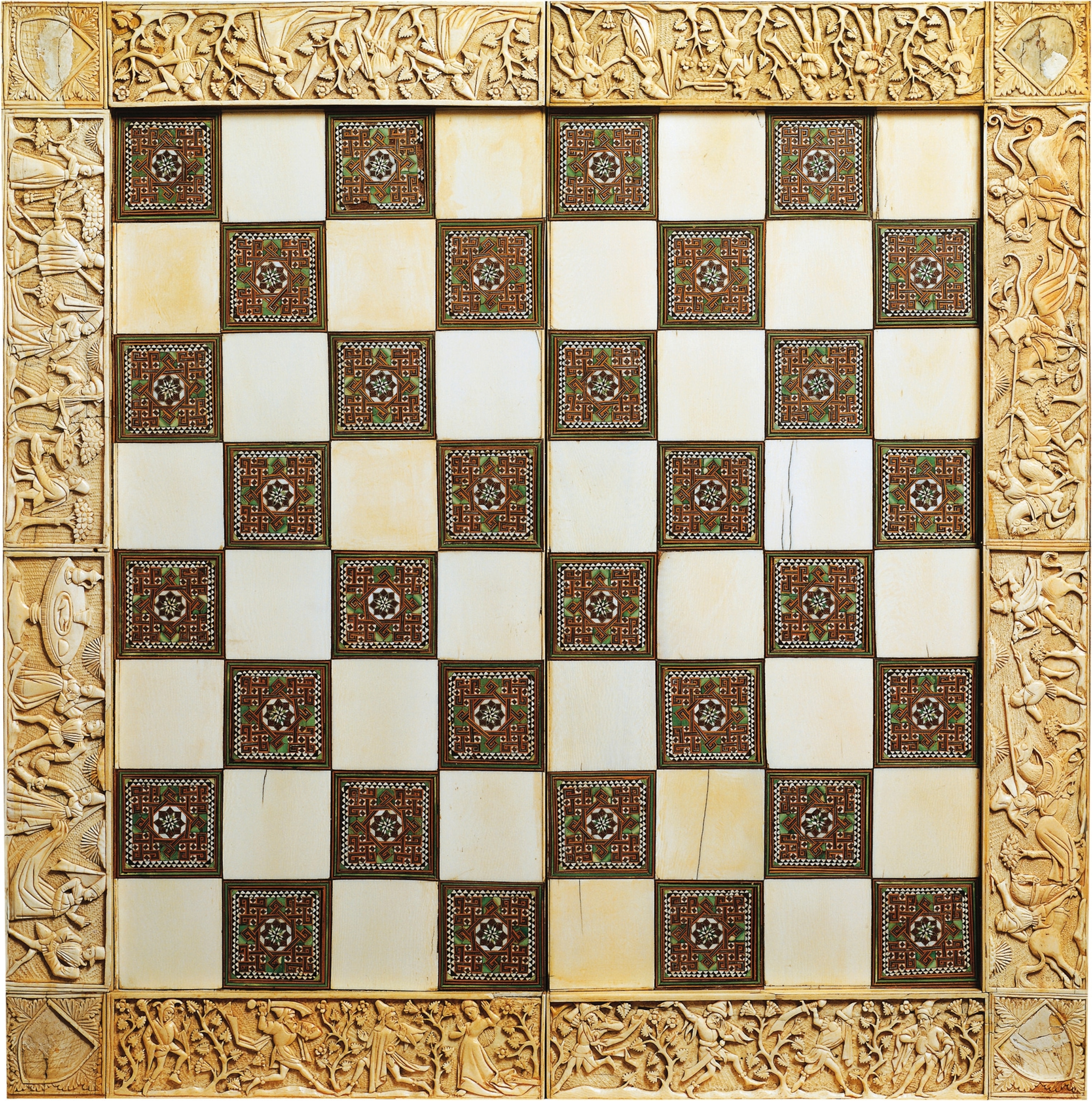
This game of strategy was soon included in the formal upbringing of noble youths and was one of seven accomplishments expected of a knight, according to Petrus Alfonsi’s Disciplina clericalis. Jenny Adams, professor of medieval literature at the University of Massachusetts Amherst, told History: “Chess was also a way of symbolically rehearsing the social order of the time.” Feudal society was built around strong contractual bonds: kings, lords, knights, and vassals were bound together by oaths of homage and fealty, while peasants or serfs provided the agricultural backbone of the system.
Between the 11th and 13th centuries, the chess pieces themselves began to evolve to reflect European society. Early pieces still resembled their original forms: vizier, elephant, and chariot. Over time, these transformed to match the European feudal hierarchy. The vizier became the queen, reflecting the growing importance of royal consorts; the elephant was recast as the bishop, signaling the church’s influence; and the rook replaced the chariot, symbolizing fortified castles. Some pieces remained unchanged: Knights endured as mounted warriors, and pawns continued to represent common foot soldiers.
(What life in medieval Europe was really like)
Beyond the castle walls
From the nobility, the game spread through the social structure. Castle porters, stewards, and squires also began to play. Adams, author of Power Play: The Literature and Politics of Chess in the Late Middle Ages, explains: “When you start to get a robust middle class, people start having more time on their hands for leisure.”
The queen's gambit
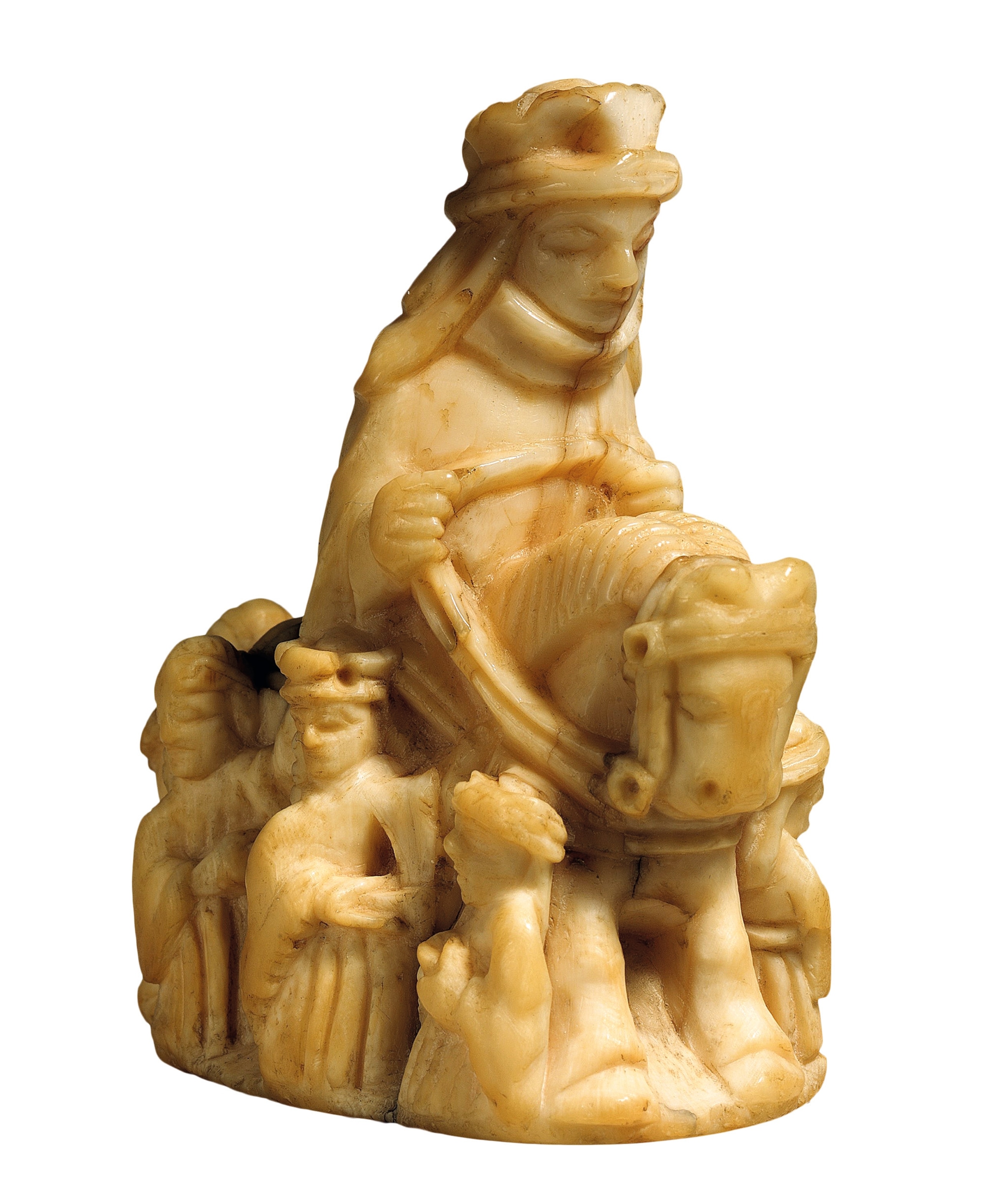
As society began to move from a feudal to capitalist system, medieval towns, or burghs, grew, and so did the social status of their inhabitants: merchants and artisans became known as the bourgeoisie. Enjoying more free time, they soon embraced chess playing too. Jewish communities, forced to live in segregated ghettos, included avid players who sharpened their skills in close-knit circles. For wandering troubadours and minstrels, the ability to play chess was an essential resource, alongside the lute and the lyric. The game was not just played by men; noble daughters learned chess alongside their brothers, often becoming skilled players in their own right, and illustrations depict young men and women courting over a game. In this way, chess provided a rare space for intellectual equality.
Endgame
As the activities available to all social strata became more varied, games were not only a remedy for boredom but also a relief from the demands of daily life. To attract ordinary players, games had to be less strenuous and less serious than chess. Playing cards, which came into wider use in the 14th century following the advent of woodblock printing in Europe, suited the new rhythm of life, and gradually displaced chess as the nobility’s favorite pastime. The reform of chess movements in the late 15th century, strengthening the queen and bishop, briefly revitalized the game, but by the 18th century, cards had triumphed, and chess no longer held its unrivaled place in society.

More recently, chess has returned to the spotlight, enjoying a boost in popularity during the pandemic lockdown. The newly discovered Burgstein pieces provide a unique window into the history of chess. Digital 3D models of each piece have been created to allow researchers and chess fans around the world to examine them.
